
Construction
Commissioned under Sultan Mahmud I as a double public bath to provide income for the Sultan Mahmud Library inside Hagia Sophia. Süleyman Ağa began the building and Abdullah Ağa completed it.
The last great bath
When Sultan Mustafa III banned the construction of large baths, Cağaloğlu remained the last great market hammam ever built in Istanbul.
The engraving
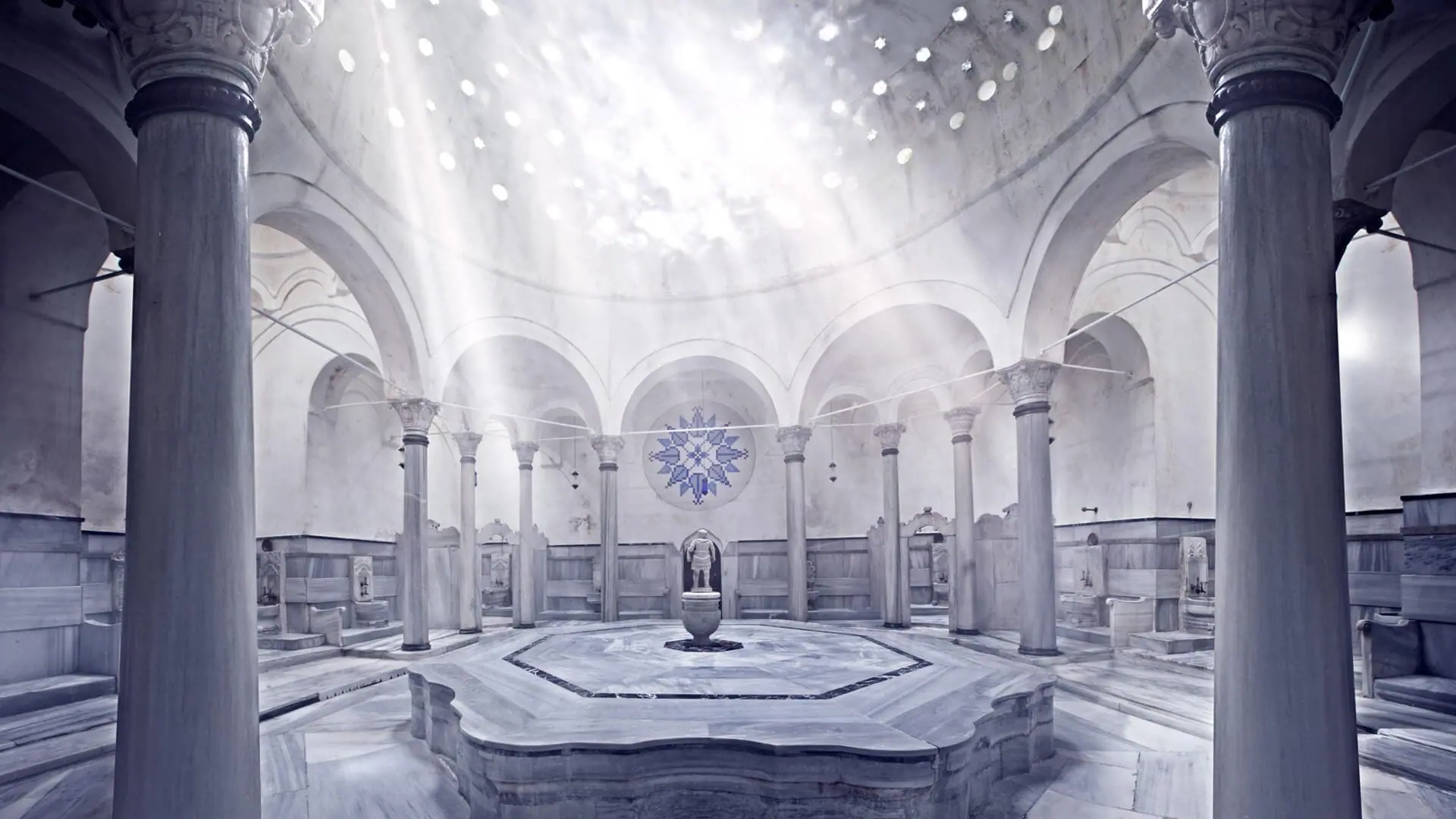
The Thomas Allom engraving in R. Walsh's book is said to depict this hammam; much of the Western image of the Turkish bath came out of this dome.
Famous guests
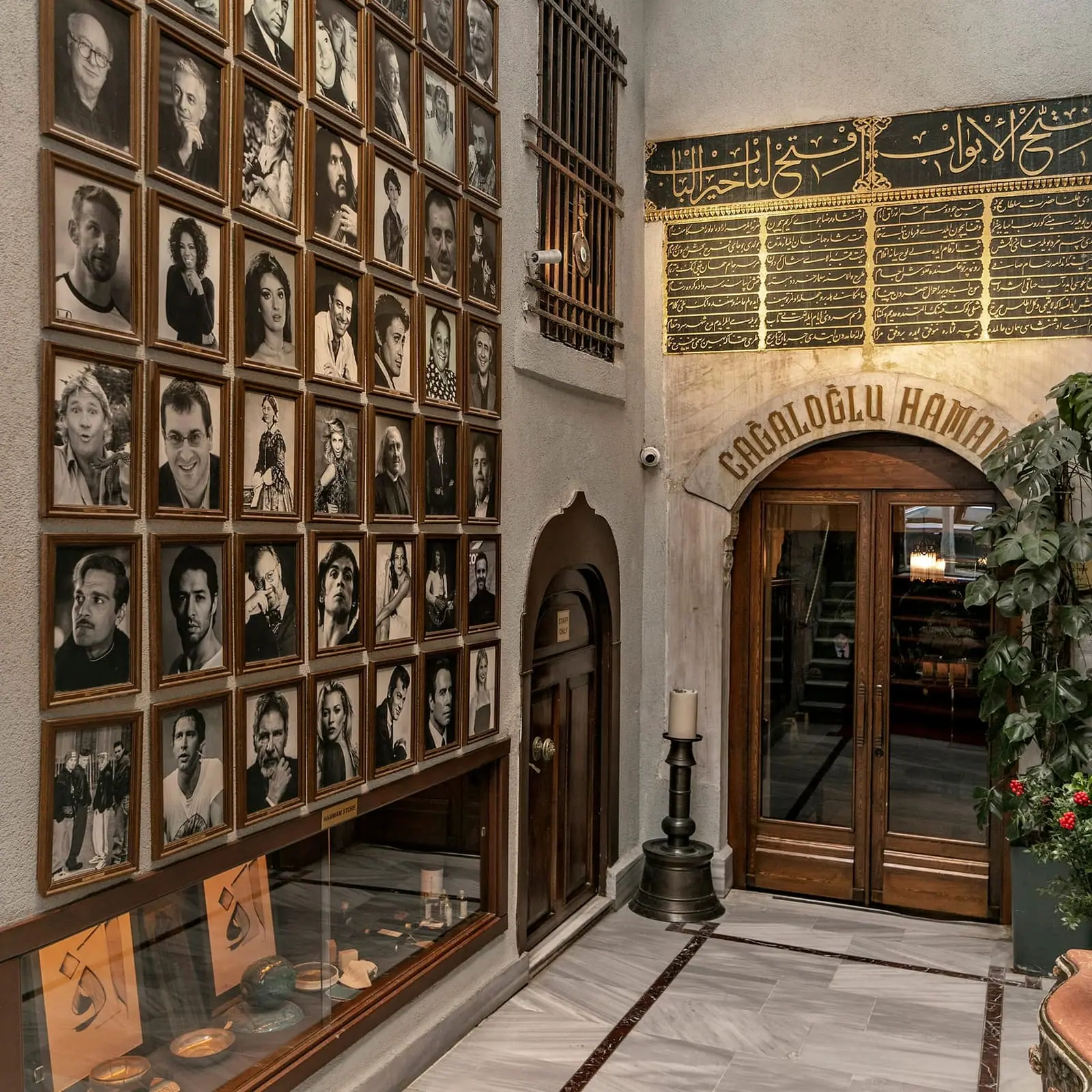
Atatürk, Kaiser Wilhelm II, Franz Liszt, Omar Sharif, Adile Naşit and Kemal Sunal were among the guests; countless films and series were shot here.
Living heritage
The only Turkish bath in the New York Times list “1,000 Places to See Before You Die” and one of the oldest Turkish businesses still in operation.
Camekân, cool room, hot room
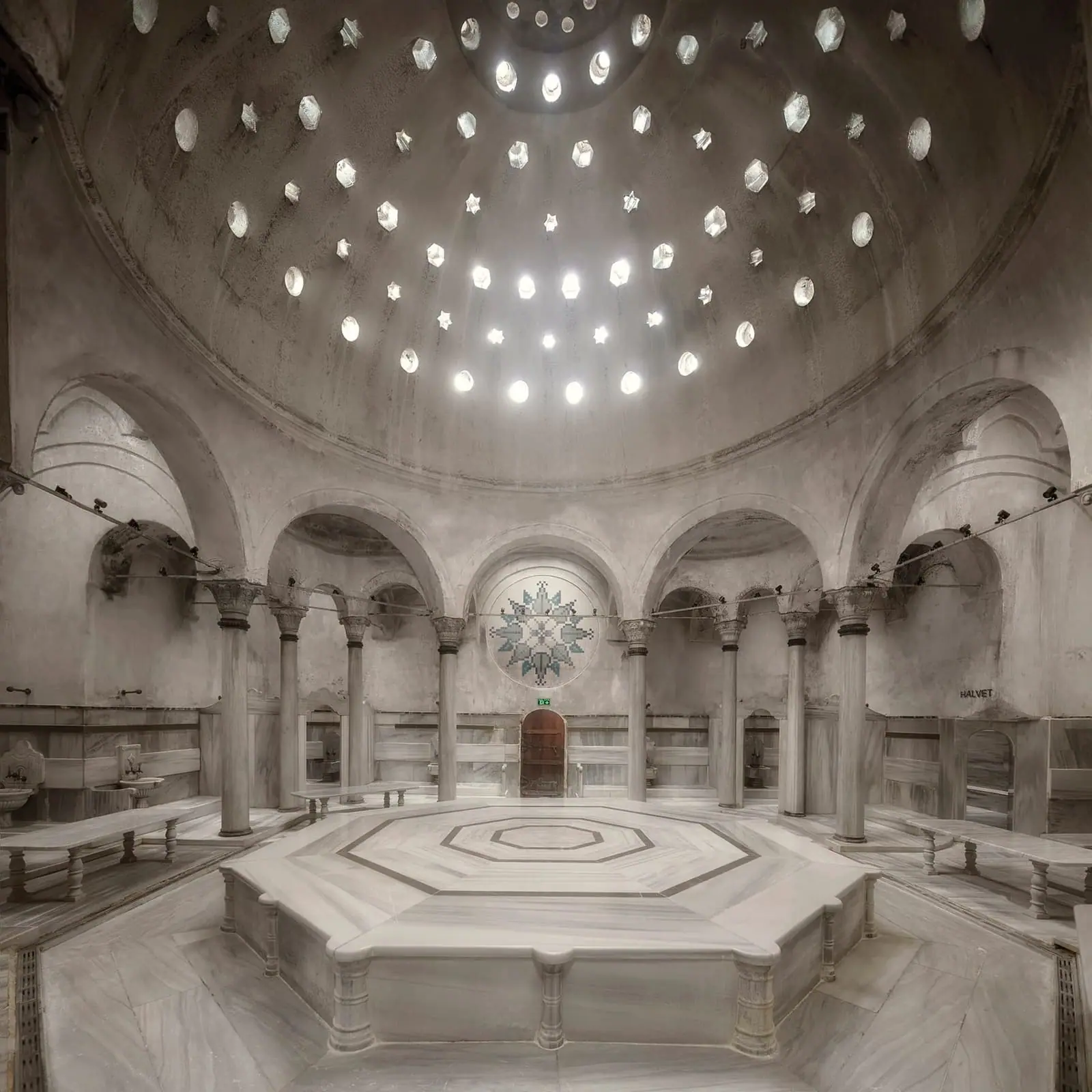
Eight marble columns, eight arches, the navel stone at the centre.
Gate and inscription
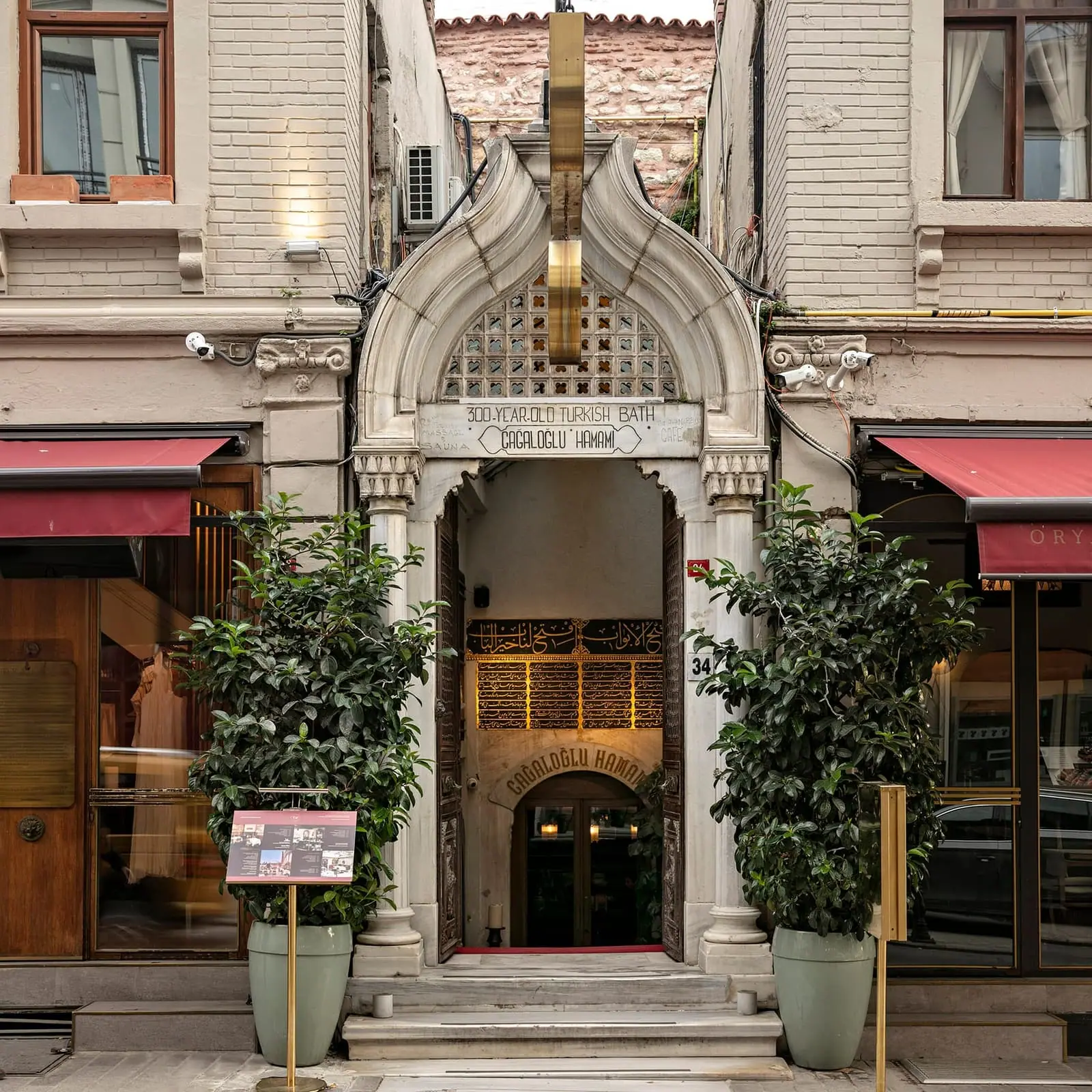
The men's entrance sits on the main street between two marble columns with muqarnas capitals; when the street level rose, a ten-step staircase was added. The inscription above the gate has seven rows and twenty-eight verses in an eclectic Turkish style. The women's entrance is on Hamam Street.
Camekân
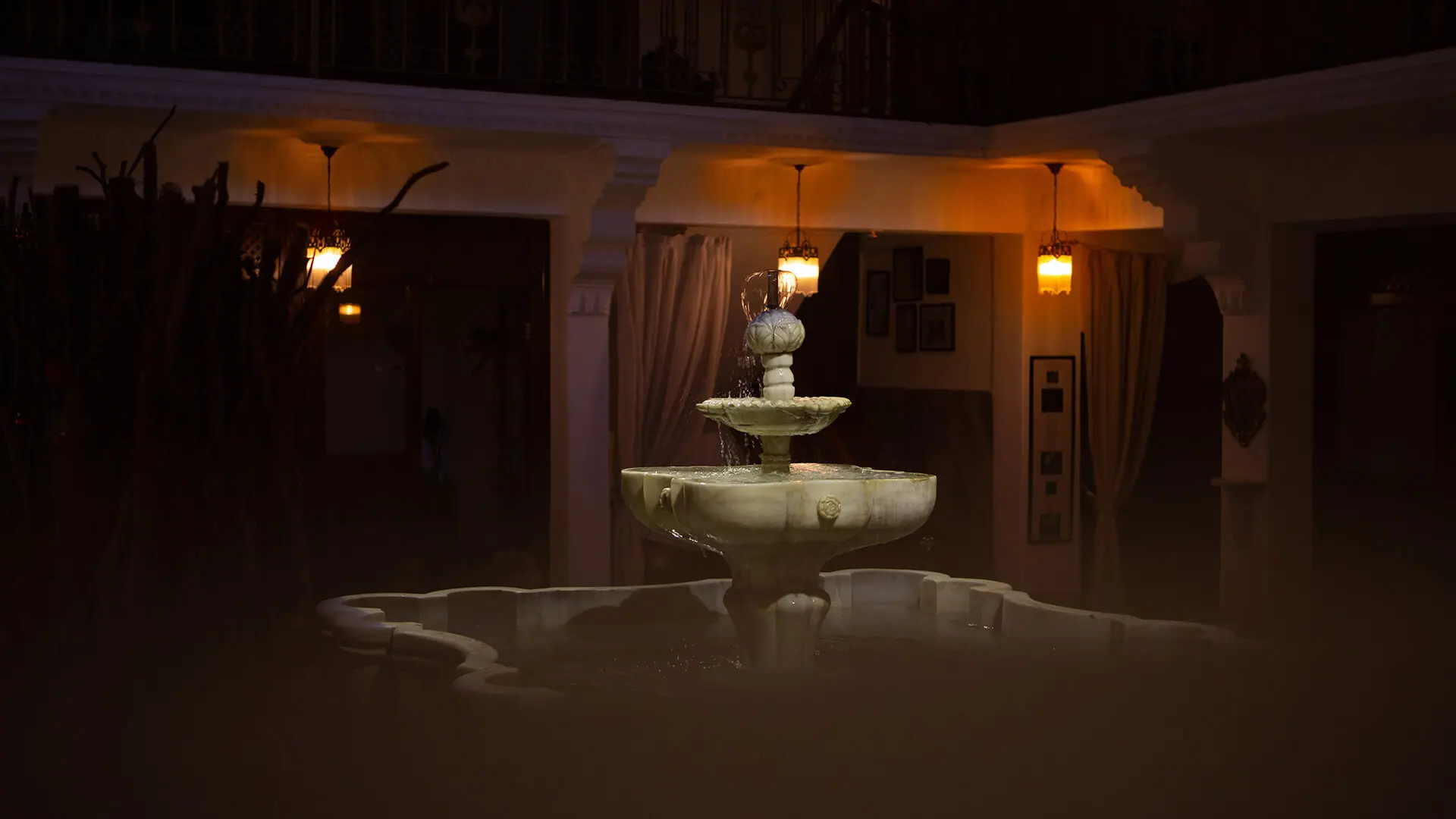
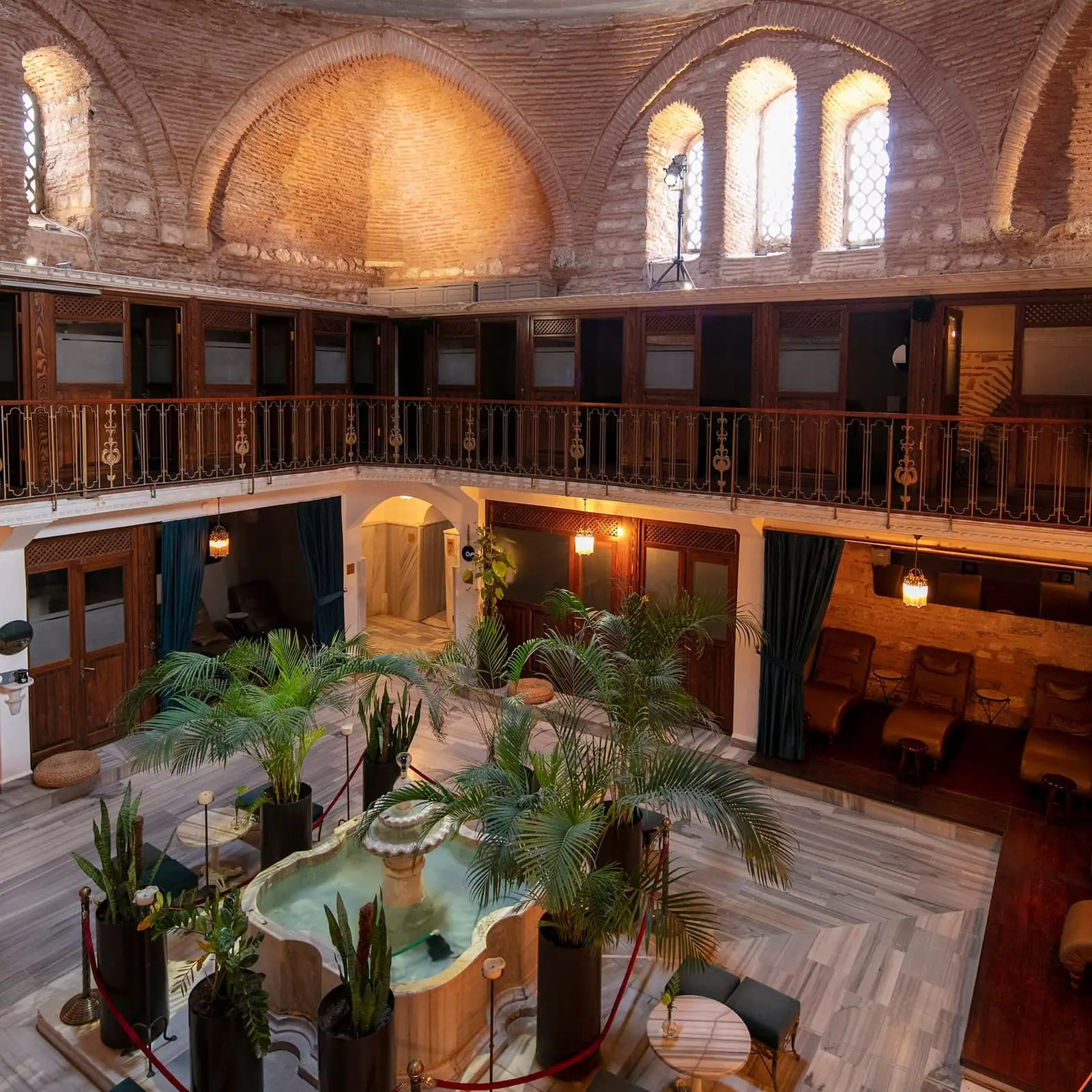
A great dome on scalloped squinches, a fountain pool at the centre, triple windows, a lantern on the dome and a gallery lined with changing rooms.
Cool room
Covered by seven barrel vaults and a small hemispherical dome, divided into three by two columns. Where tea and sherbet are served at the end of the ritual.
Hot room
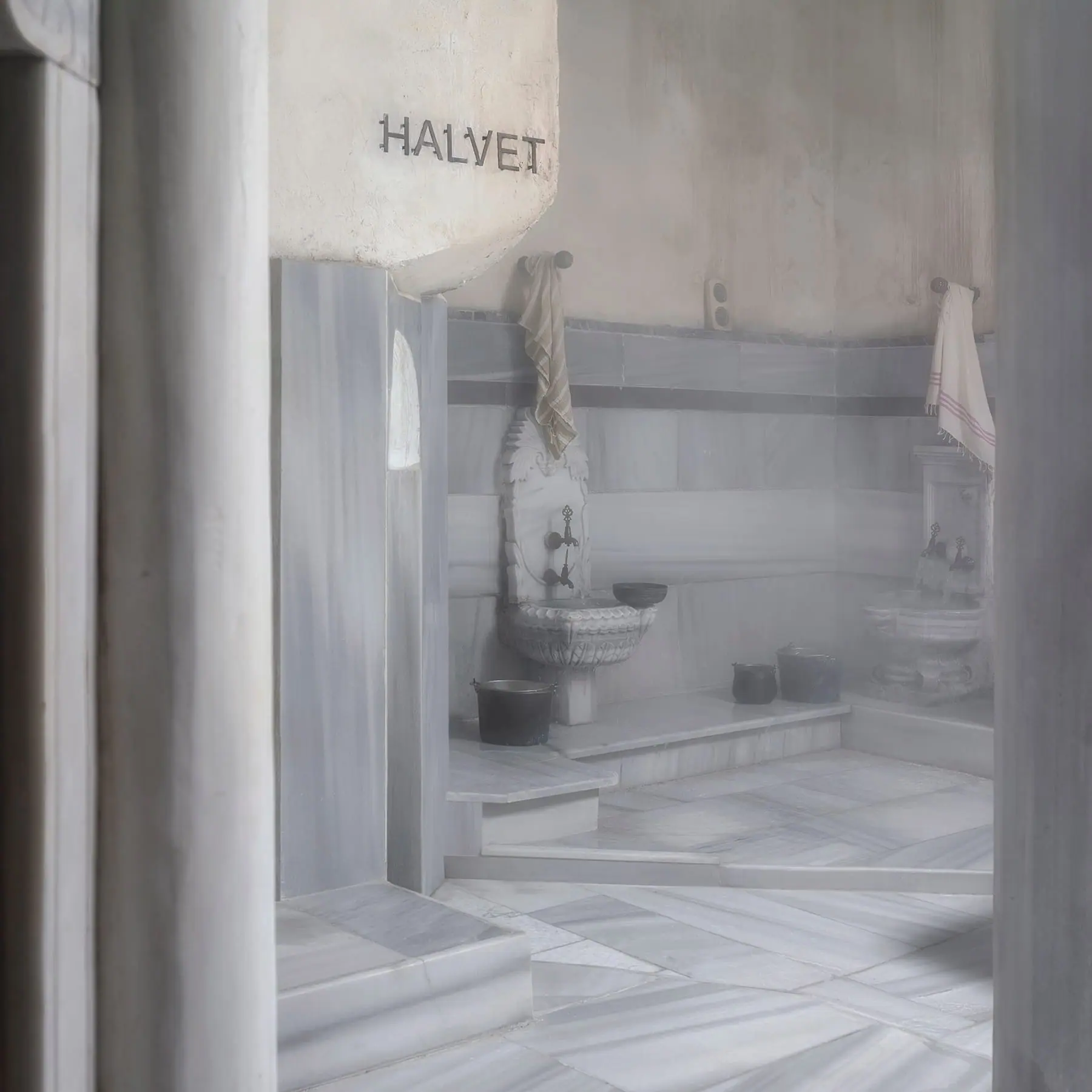
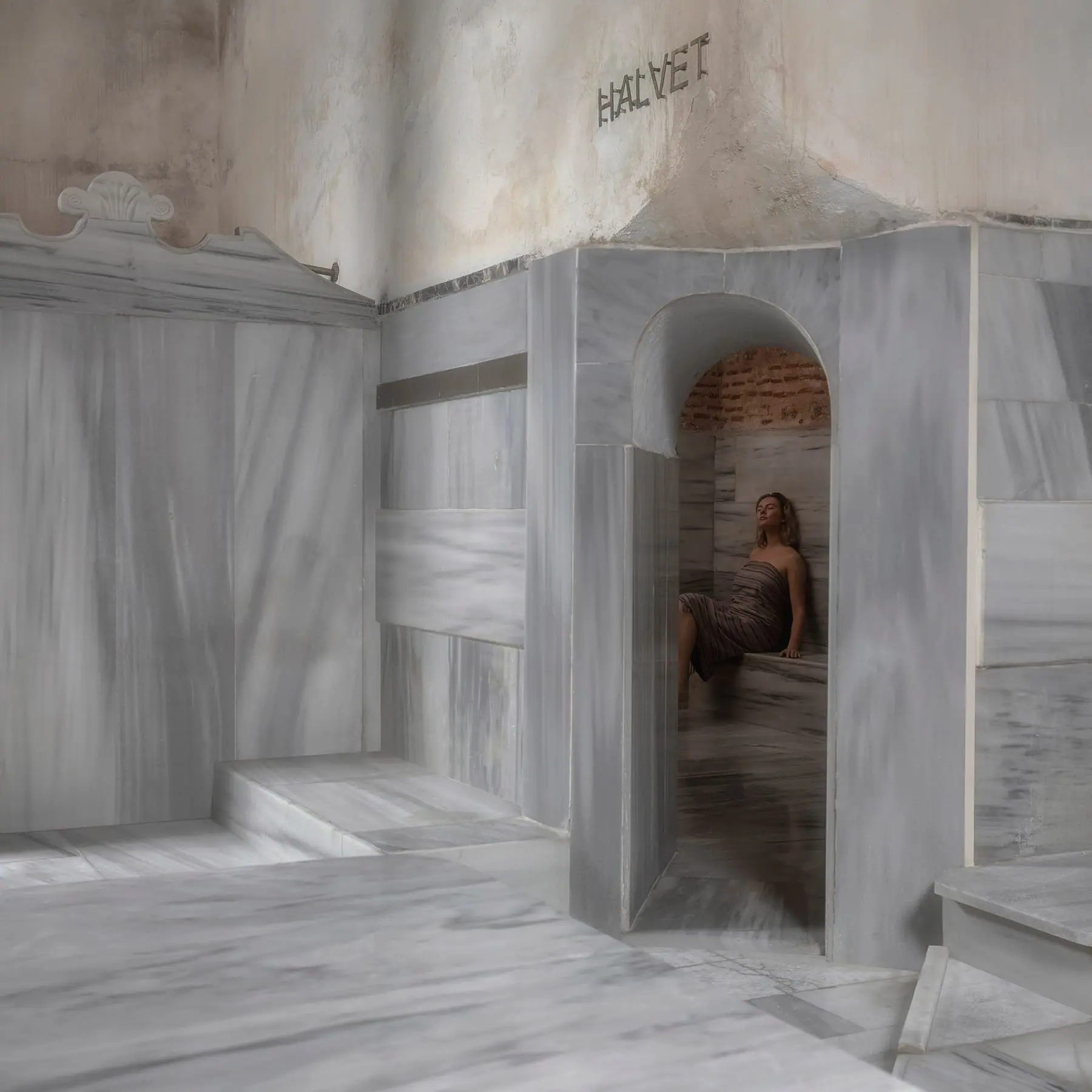
Eight arches resting on eight marble columns, the marble navel stone at the centre, private alcoves in the four corners and three divans. The furnace lies behind the two heating chambers.
The dream of Ali of Bitlis
The folk poet Ali of Bitlis worked here first as a stoker and then as a bath attendant. The story goes that one night he dreamt the stones of the hammam had turned to gold; he woke with a handful of warm ash in his hand and a poem on his tongue.
In the second half of the 17th century, Evliya Çelebi counted three hundred baths in Istanbul, one hundred and fifty large and one hundred and fifty small.
their income paid the workers and maintained the buildings.
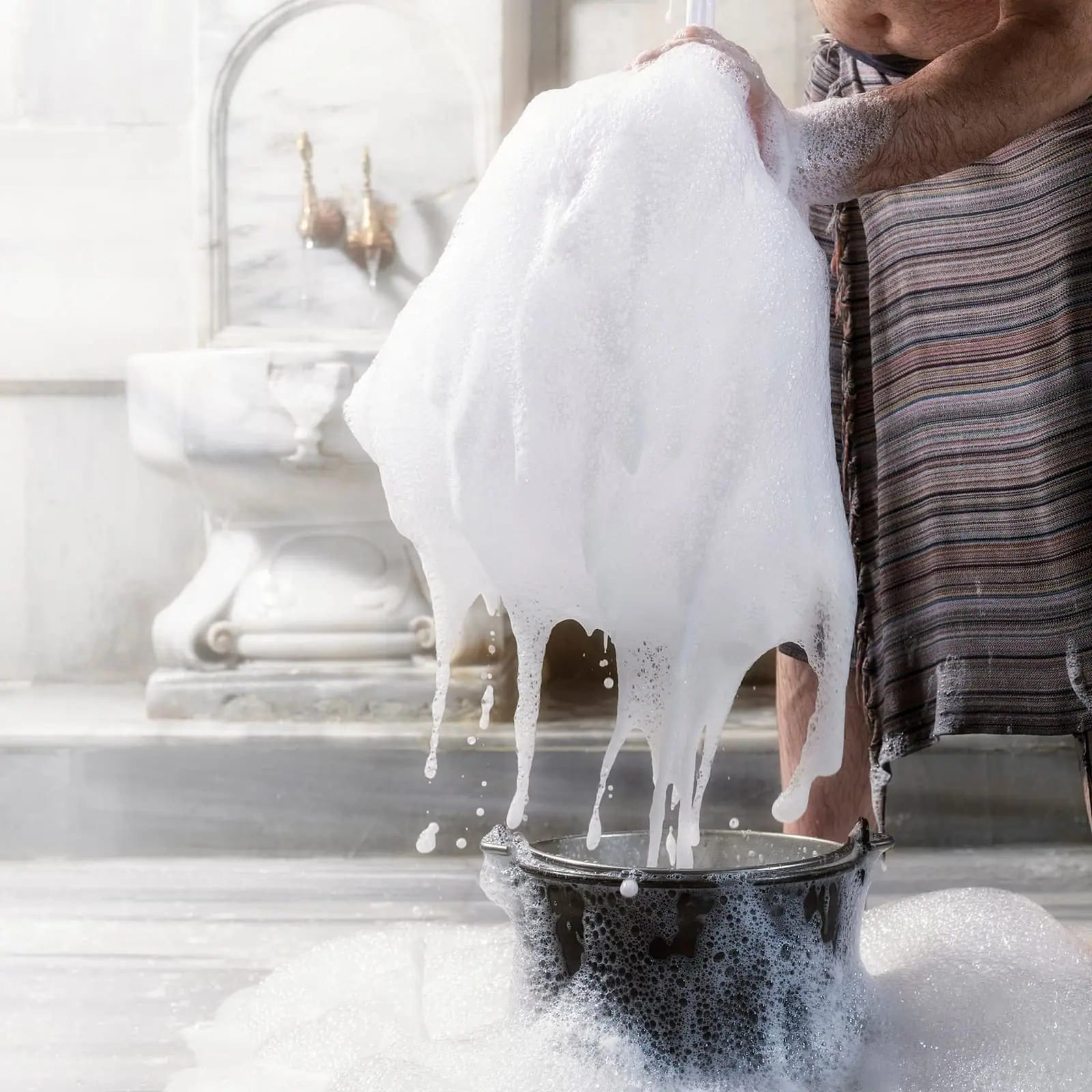
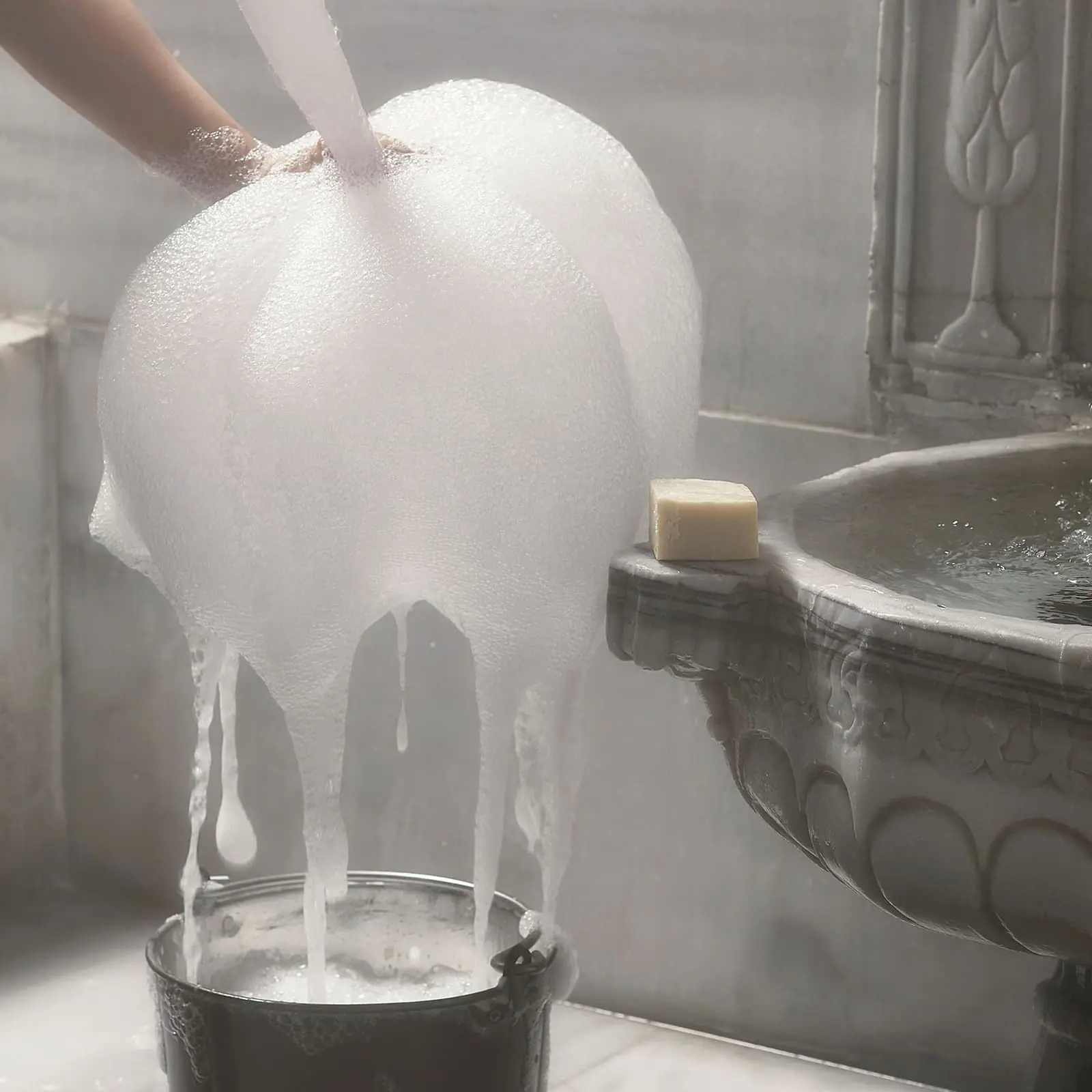
A day under the dome